
Advocates tell Leinster House briefing that refusal to grant and Emergency Winter Payment will lead to harm for disabled people
January 28 2026, 04:29pm
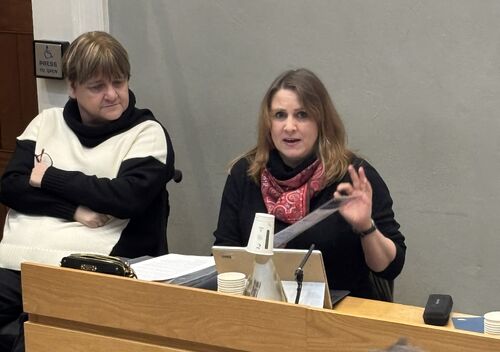
At an AV Room briefing hosted by the Social Democrats, the Irish Wheelchair Association, IWA and the Disability Federation of Ireland, DFI and Access for All were joined by disabled people to call for an urgent, once-off €400 emergency winter payment for disabled people and households with a disabled person.
Disability advocacy groups and people with disabilities have warned the government that without immediate intervention, the cost-of-living crisis will lead to "avoidable harm".
The briefing marks the latest escalation in a campaign that has been gathering momentum since December, when protesters gathered outside the Dáil gates to highlight the impossible choices facing disabled people.
The issue reached the floor of the Dáil again on Wednesday (14 Jan) during Leaders' Questions, when Social Democrats TD Cian O'Callaghan challenged the government directly. In response, the Taoiseach ruled out any repeat of the one-off payment, describing it as "not fiscally sustainable" for the State and pointing instead to a permanent Cost of Disability Payment scheduled for Budget 2027.
For the advocates in the room, being told to wait until 2027 was not just disappointing, it was viewed as dangerous.
The lived reality
Lynn McDonald from Early Onset Parkinson’s Disease Ireland (EOPD) described the daily, grinding battle to keep her home warm without falling into debt. For her, heating is not a luxury but a medical necessity to manage her condition.
She highlighted how the "cost of disability" dictates every decision in her home, from the "luxury" of turning on the immersion heater to the strict rationing of food in her shopping basket.
She emphasised that while she shares the same overheads as a full-time worker, including mortgage, bills, childcare, she is no longer capable of meeting them. She urged policymakers to stop viewing people with disabilities as a monolith, noting that EOPD patients often have young families and distinct financial pressures.
"We have young children," she said. "We have the same overheads as a full-time working person... but it is heartbreaking to know at the end of every week, I don't have enough to pay the bills."
Life-or-death decisions
The room also heard from Carolyn Akintola, a wheelchair user who pointed to the hidden, everyday costs that go unnoticed by the wider public, such as the premium price of safe food for those with severe allergies.
"Try buying any of the cheaper brands... that doesn't have a 'may contain traces of nuts' warning," she explained, illustrating how safety concerns force many disabled people to buy more expensive products despite financial strain.
The logistics of survival
Kayleigh McKivett, another advocate sharing her experience, described the exhaustion of trying to stretch a fixed income. She detailed the logistical nightmare of travelling to multiple different shops just to save small amounts on groceries.
Kayleigh vividly described the immediate trade-offs required when a utility bill lands. "My latest bill was like €250... so I had to make a sacrifice so I couldn't buy as much in the shopping," she said, emphasising that many people are now left entirely exposed, without family members who can afford to step in and help.
A crisis, not just a cost
Emer Begley, DFI’s Director of Advocacy provided the data to back up these stories, noting that the deprivation rate for people unable to work due to disability now stands at 39%, more than double that of the general population. Disabled people have a higher risk of falling into utility arrears, and their risk of poverty continues to climb.
Joan Carthy, National Advocacy Manager for the IWA, argued that the proposed €400 payment is a "preventative" measure that makes economic sense. "It is faster and cheaper to prevent harm than to respond to it later," she argued, warning that without this support, the state will inevitably pay more through increased GP visits and hospital admissions.
"People with disabilities are making decisions no one should have to make," she concluded. "Heating versus food, heating versus medication, heating versus essential equipment."
See the reaction of disability activist Michael Meere alongside DFI's Policy Advocacy Manager Fleachta Phelan:
Get involved
Support the call for a €400 Emergency Winter Payment by emailing your local TD with IWA's easy-to-use template.
View and download our Cost of Disability factsheet here:
